


Balboa Park: A Park for the People
Balboa Park is the historic and cultural heart of San Diego. In 1868, city leaders set aside the land as “City Park,” envisioning it as a public green space similar to New York’s Central Park. At its core, it was designed as a gift to the city, a permanent green and cultural sanctuary created for public enjoyment.
While individual museums and attractions have always needed funding to operate, the park itself was never meant to be something people had to “buy into” just to experience. Its founding vision was created with the belief that art, nature, and shared public space should be accessible to everyone, a philosophy that still shapes how many San Diegans see and defend their park today.
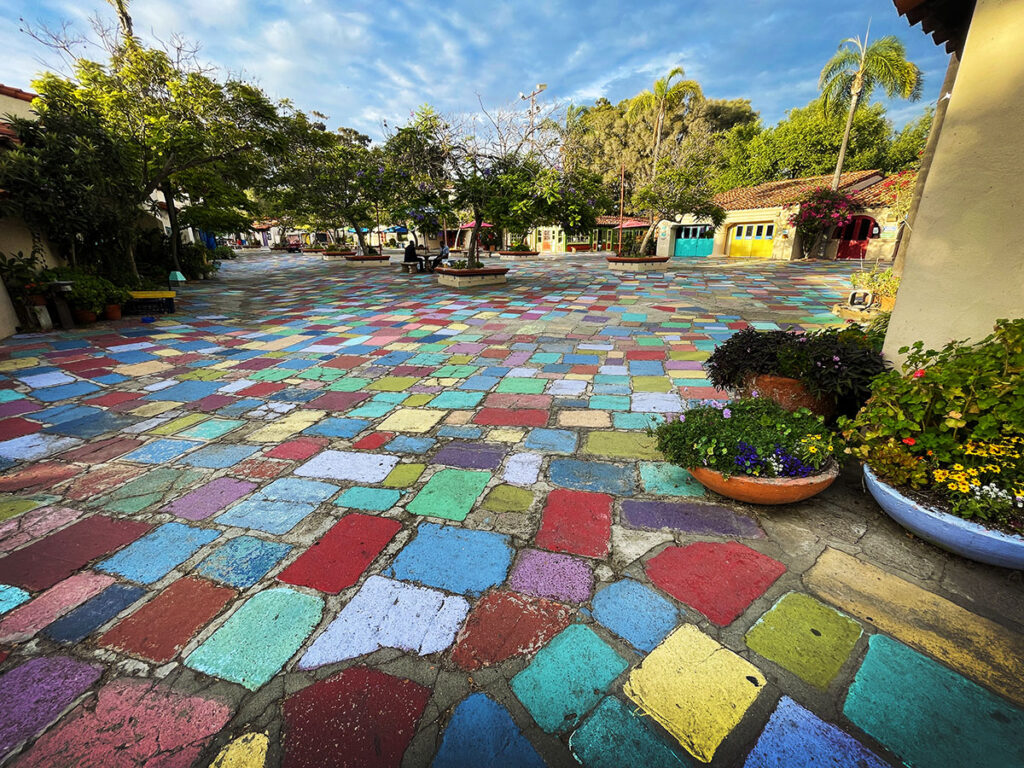
As of 2026, the City of San Diego has begun charging the public to park here. Balboa Park was created as a free public commons, a gift to the people of San Diego, not a revenue stream to be monetized. To begin charging for parking feels like a betrayal of the park’s original purpose. This land was set aside in 1868 so that everyone, regardless of income, could access beauty, culture, and open space without financial barriers.
 Turning parking into a toll quietly transforms that civic right into a paid privilege that disproportionately harms locals, families, seniors, and anyone without easy transit access. Charging people simply to arrive erodes the democratic spirit that has defined Balboa Park for more than a century and signals a shift toward treating our shared heritage as something to be bought back from the city.
If San Diegans do not push back, this sets a precedent that more of our public spaces can be carved up and priced out, which is why residents must band together, speak up, and defend the idea that Balboa Park belongs to the people, not to parking meters.
History of Balboa Park
In the early twentieth century, San Diego was chosen to host a world’s fair celebrating the opening of the Panama Canal. The Panama-California Exposition of 1915–1916 was designed not only to attract international attention but also to introduce San Diego as a sophisticated, global city.
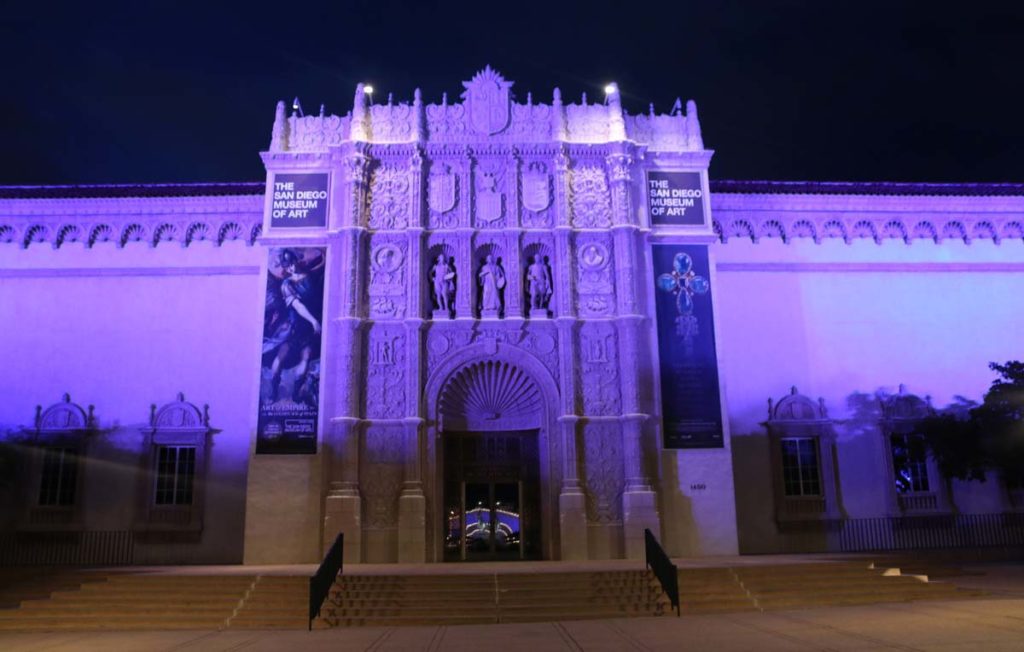
It was created in a dramatic Spanish Colonial Revival style that drew inspiration from historic buildings in Spain and Mexico. Ornate towers, arched corridors, and richly decorated façades rose from what had once been open land, instantly transforming the park into a showpiece of architecture.
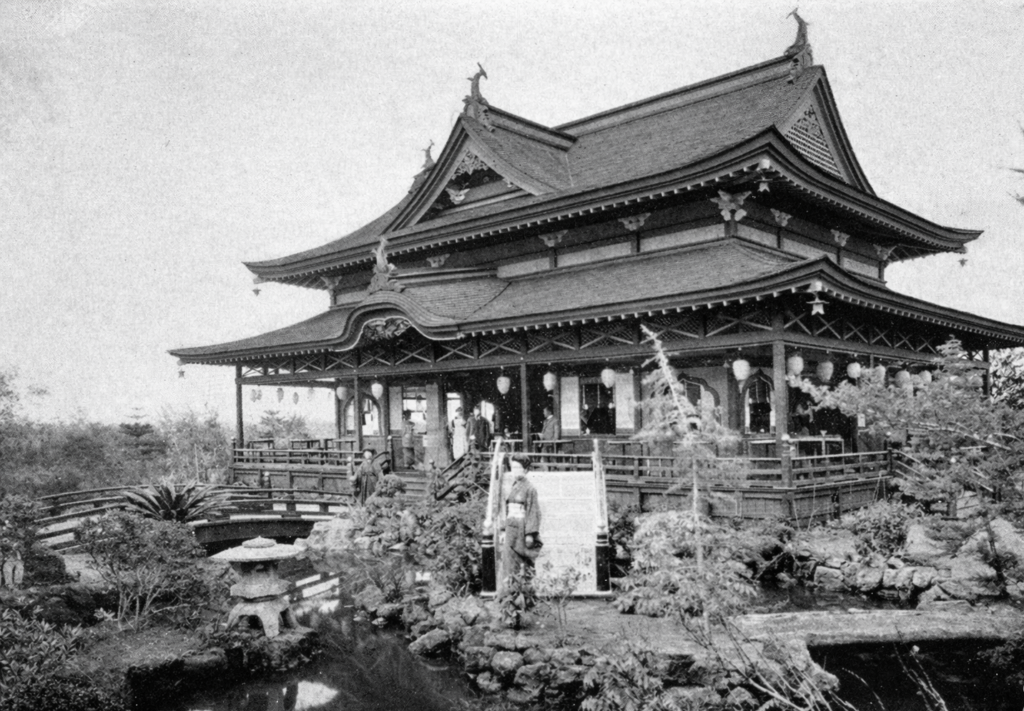
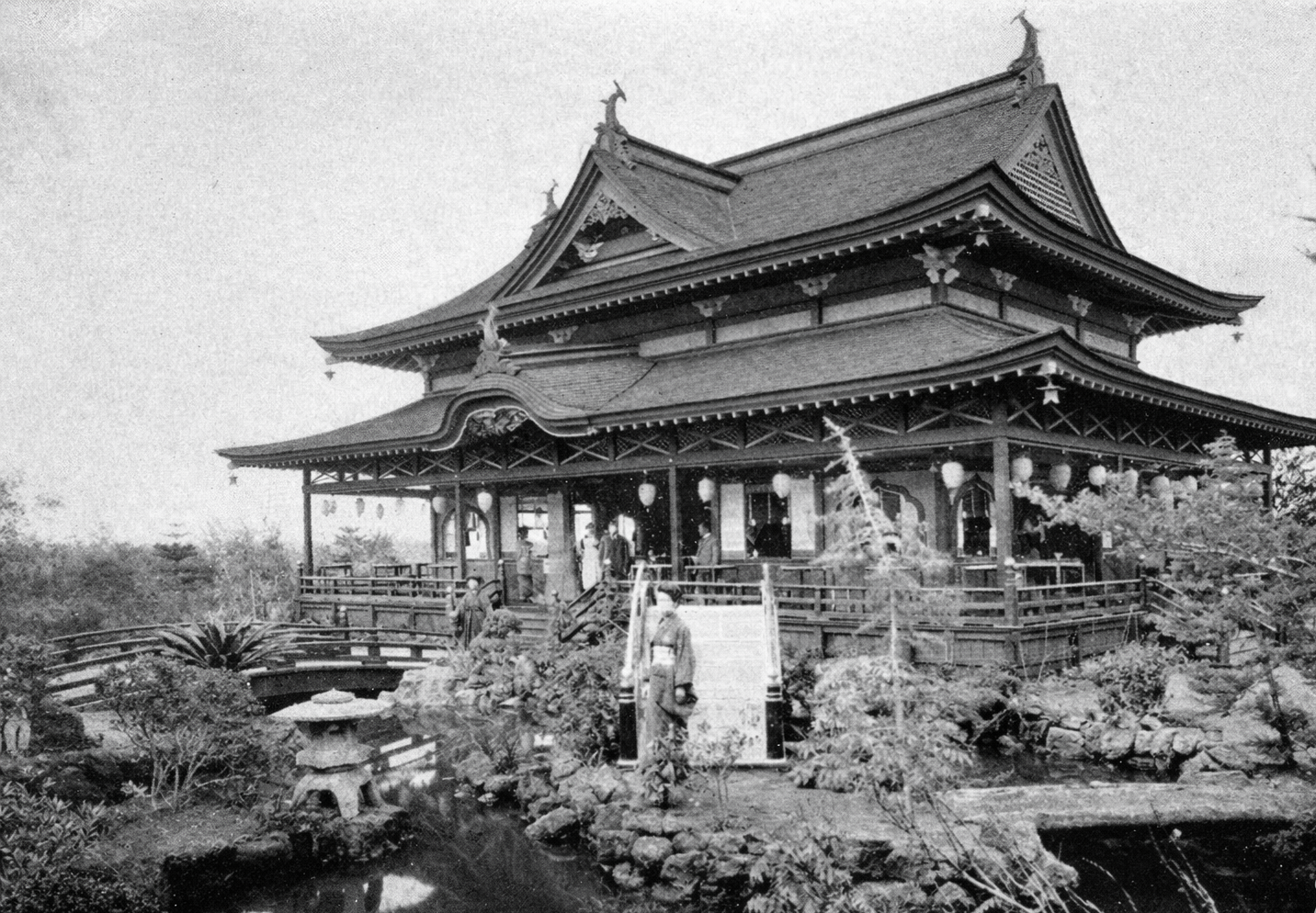
Historic shot of the original Japanese Friendship Garden
The 1915 exposition was a massive success, drawing millions of visitors and leaving behind many of the park’s most iconic buildings, including the California Tower, the Botanical Building, and the El Prado complex. Exhibits showcased science, agriculture, industry, and the arts, while gardens and plazas invited visitors to wander through a romanticized vision of Southern California’s heritage.
Although many of the buildings were originally meant to be temporary, public affection for the park led to their preservation and reuse, laying the foundation for Balboa Park as a permanent cultural district.
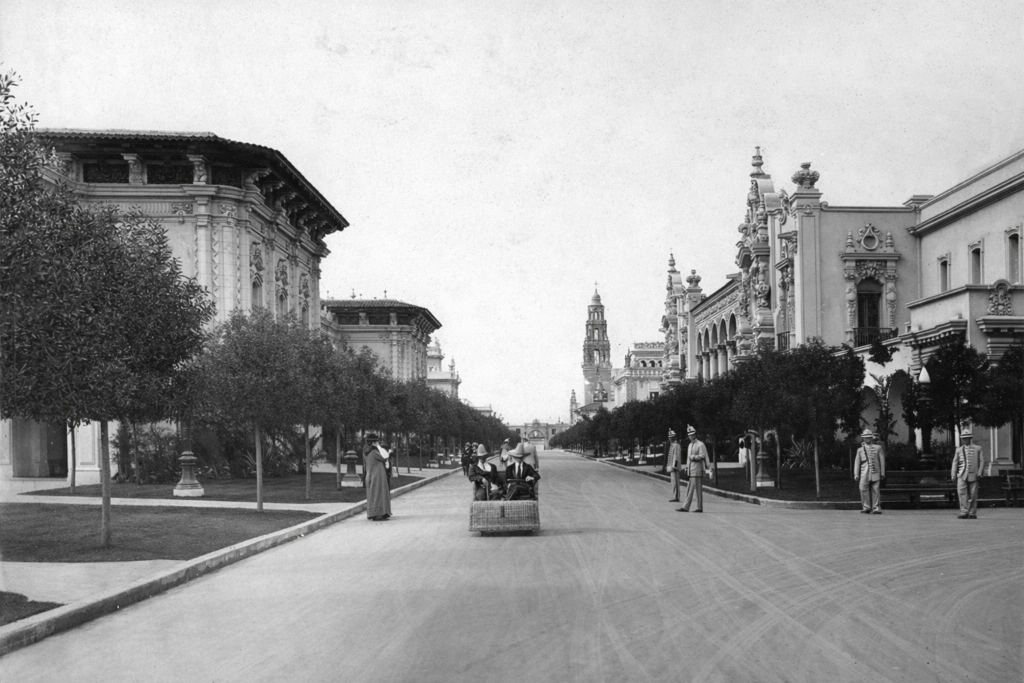
Two decades later, during the depths of the Great Depression, Balboa Park hosted another major event: the California Pacific International Exposition of 1935–1936. This second world’s fair was designed to boost morale and stimulate the local economy. It expanded the park with new buildings and introduced a more playful, modern design style alongside the original Spanish Revival structures.
This exposition emphasized innovation, technology and the futures. It sealed Balboa Park’s role as a place where history and progress could coexist.
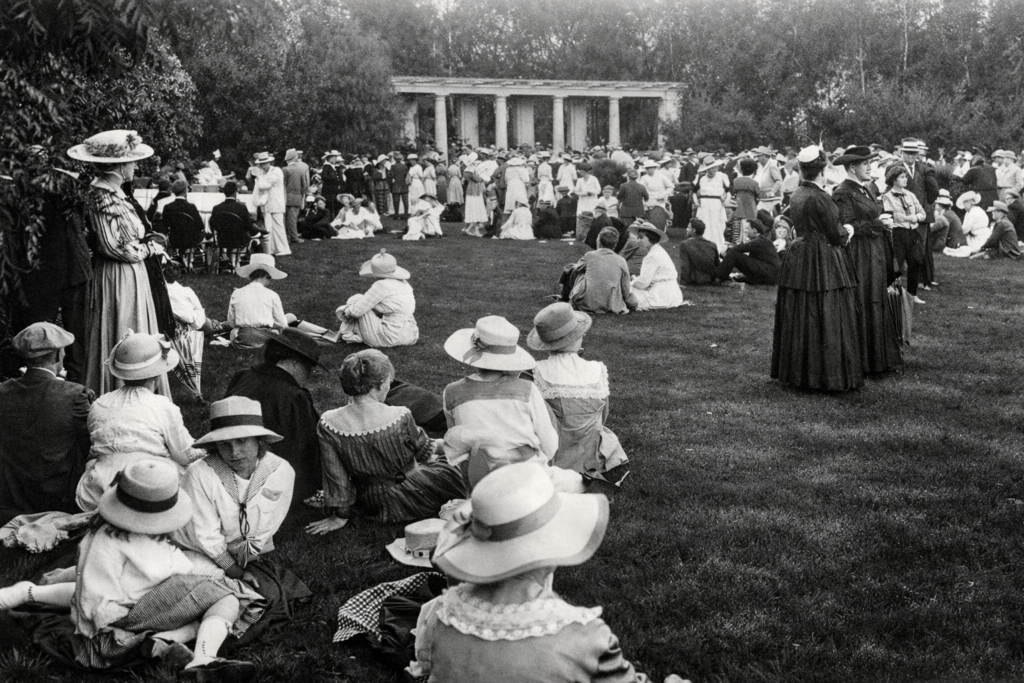
After the expositions ended, the park’s buildings were gradually converted into museums, theaters, and cultural institutions. What had once housed temporary exhibits became permanent homes for organizations like the San Diego Museum of Art, the Natural History Museum, and the Museum of Us. Its gardens, including the Japanese Friendship Garden and Alcazar Garden, added new layers of international influence and natural beauty.
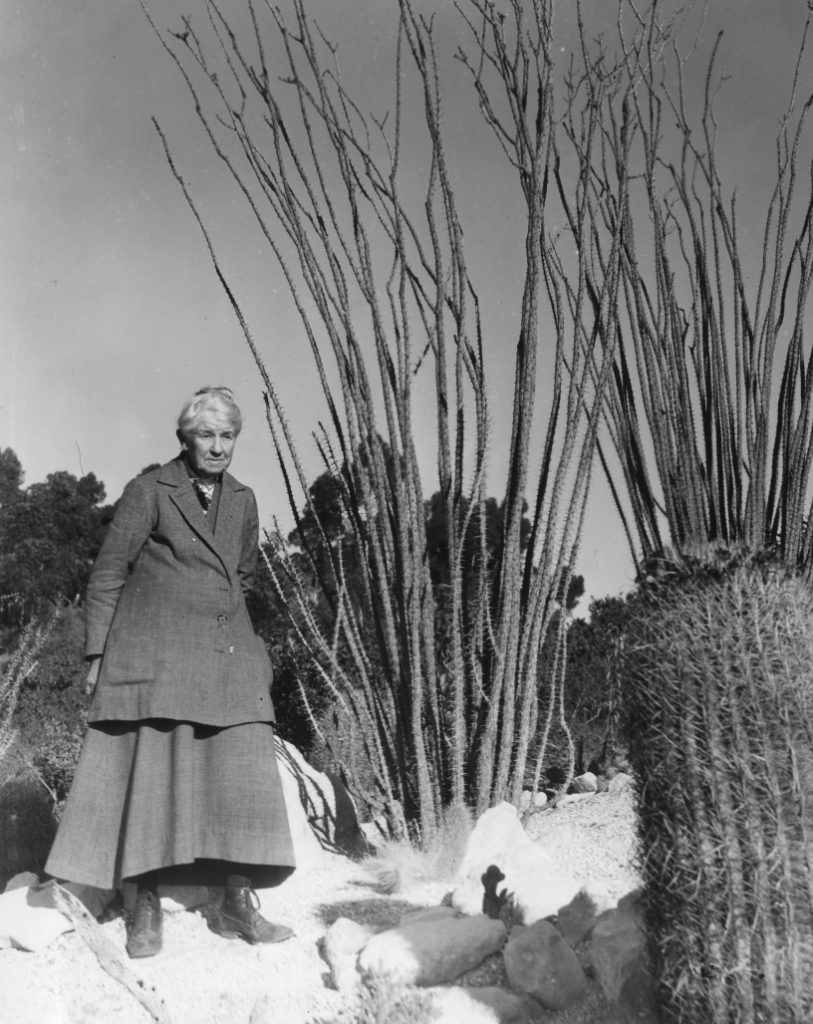
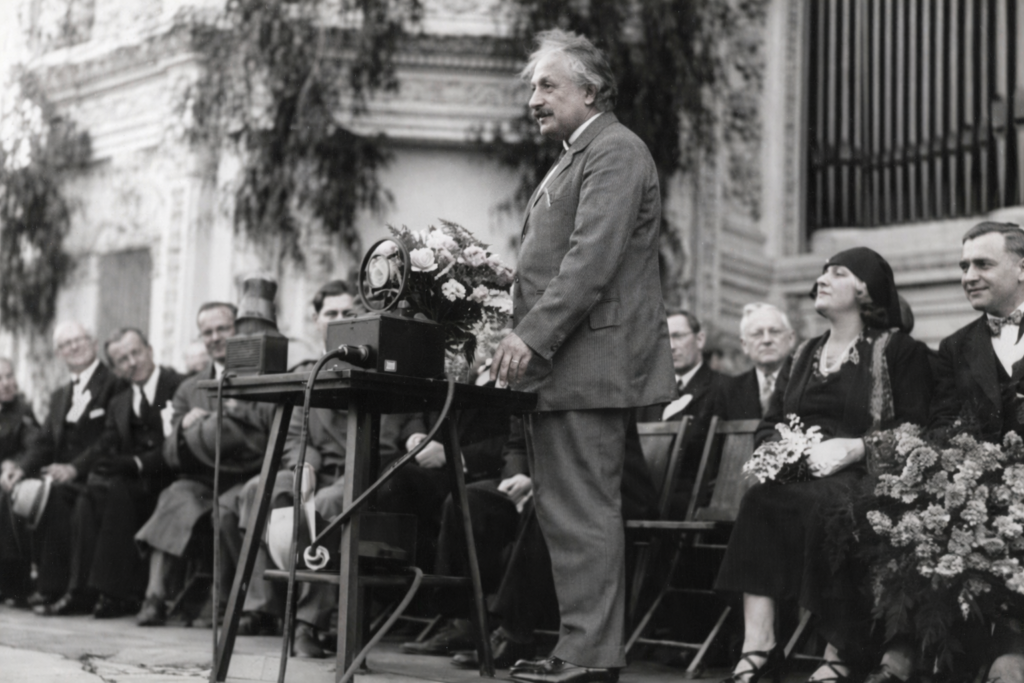
Kate Sessions, the "Godmother of Balboa Park"
During World War II, Balboa Park took on an entirely different role as the United States mobilized for war. Many of the park’s grand exposition buildings were converted into a U.S. Navy and Marine Corps training center and medical complex, collectively known as Naval Hospital San Diego and the U.S. Naval Training Station.
Museums and exhibition halls became hospital wards, operating rooms, barracks, classrooms, and administrative offices, treating and housing thousands of wounded and recovering service members. At its peak, the park held more than 26,000 patients and personnel, making it one of the largest military medical facilities in the country.
The transformation was so extensive that public access to much of Balboa Park was restricted for nearly a decade, and it was not until the late 1940s that the buildings were gradually returned to their cultural and civic uses, reshaping the park once again from a wartime hub back into a center for art, science, and public life.


Sandy Kobayashi
It is horrible that the City of San Diego is charging for parking in Balboa Park. It will ruin so many things. A lot of people volunteer there & they will not do it if they have to pay for parking. Tourist will not come because so many other things in San Diego cost so much. I can’t believe that the paid parking got passed. I am so MAD!